2026 Colour Trends Knitting Crochet: Palette and Swatch to Adopt
Trend Colours 2026: The Hues to Embrace for Your Knitting and Crochet Creations
Choosing yarn starts with choosing a colour. And it’s often the most exciting moment of a project, the one where you spend twenty minutes in front of the display, wavering between three shades of blue. Good news: in 2026, the palette is broad, generous, and inspires you to try everything. From soothing white to vibrant tones that pop, there’s something for every style.
We break down the key colour trends of the season and, most importantly, how to use them in your projects.
Cloud Dancer White: Pantone's Colour of the Year
Let’s start with the official star. Pantone has chosen Cloud Dancer (11-4201) for 2026, a noble and luminous white, neither cold nor clinical. It’s a soft, almost milky white, evoking calm and simplicity. In knitting or crochet, it looks stunning on everything: an airy mohair shawl, a summer cotton top, a natural raffia bag. It highlights textured stitches like nothing else, because every rise and fall catches the light differently.
The plus of Cloud Dancer is that it blends with absolutely everything. Alone for a minimalist piece, or as a neutral base to accentuate bright touches. It's the ultimate safe choice. Find our white and off-white yarns to find the perfect shade.
Earthy Tones: Terracotta, Ochre and Clay
It's the colour family that’s been dominant for several seasons and shows no sign of fading. Terracotta, rust, sand, ochre, clay: these warm and organic hues are inspired by earth and raw materials. In 2026, they’re worn in total look or paired with off-white for a result that’s both natural and sophisticated.
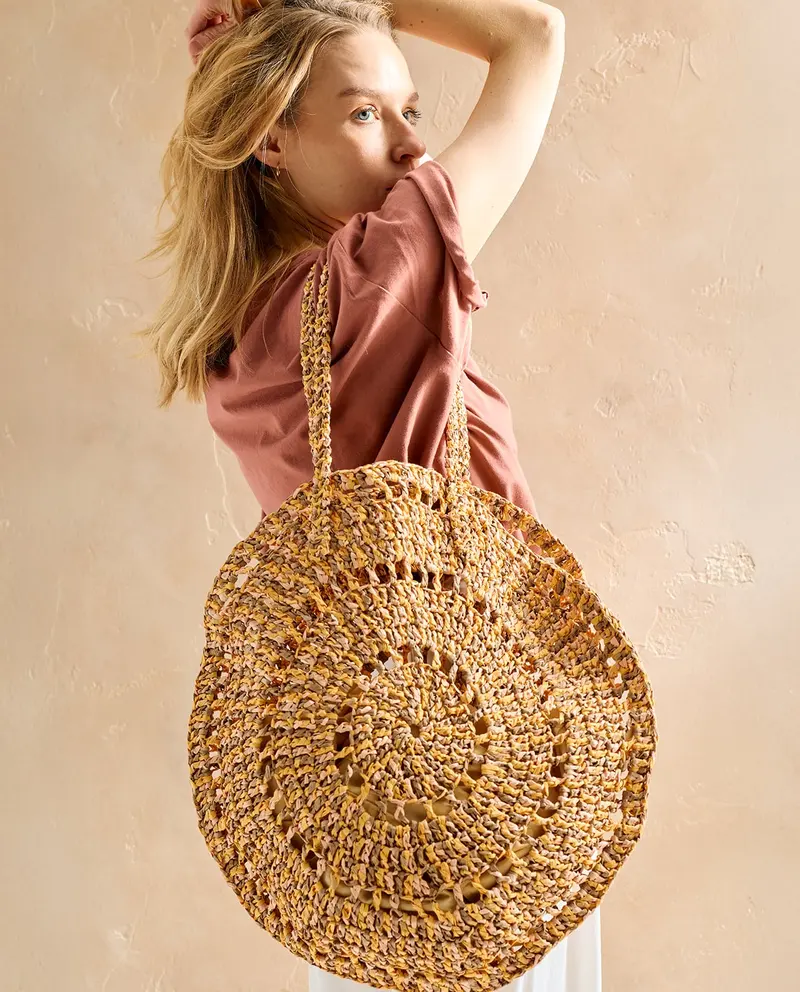
On a raffia bag, a basket or a beach tote, these shades are perfect. They also work wonderfully in granny squares (a terracotta square, a sand square, a rust square) or in soft stripes on a shawl. And they combine effortlessly among themselves, making palette choices simpler when starting a multicolour project.
Blue in All Its Forms
Blue is everywhere in 2026, but not just any blue. Two distinct directions are emerging. On one side, the electric blue, saturated and vibrant, transforming any classic piece into a contemporary one. On the other, the soft blue (sky blue, greyish blue, lavender blue), soothing and easy to live with.
Electric blue is spectacular in accents: a bag border, stripes on a top, a granny square inserted into a neutral composition. It creates a striking contrast with beige or white. Soft blue works well in large areas: an entire sweater, a shawl, a baby blanket. It’s a colour that reassures and appeals to everyone.
Sage Green (and Its Botanical Cousins)
Sage green has conquered interiors in recent years and now firmly establishes itself in knitting yarns. In 2026, it’s joined by a whole family of natural greens: olive green, moss green, petrol green, mint green. These botanical hues bring freshness and serenity, with an organic vibe very much in tune with today’s spirit.
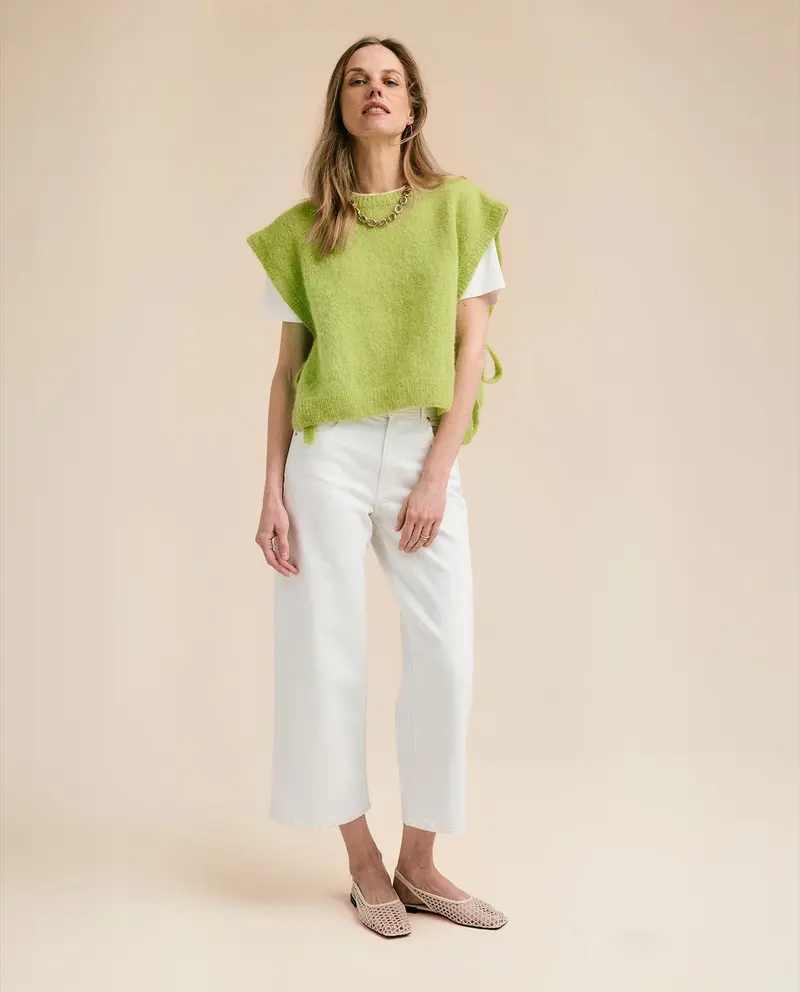
Sage green is particularly beautiful paired with powdered pink (a gentle and modern duo) or with terracotta (a warm and natural combo). In crochet, it works wonders on home accessories (pot holders, cushions, baskets) but also on summer clothing. A sage green bralette in Phil Cotton 3 is the kind of piece that stands out without overdoing it.
Vibrant Colours: Coral, Fuchsia, Banana Yellow
After years of soft pastels, 2026 dares bold and saturated hues. Coral, fuchsia, tangerine orange, banana yellow, and bright red make a strong comeback. These energetic colours infuse personality into any project. They’re not for everyone nor every piece, but when they’re well placed, they change everything.
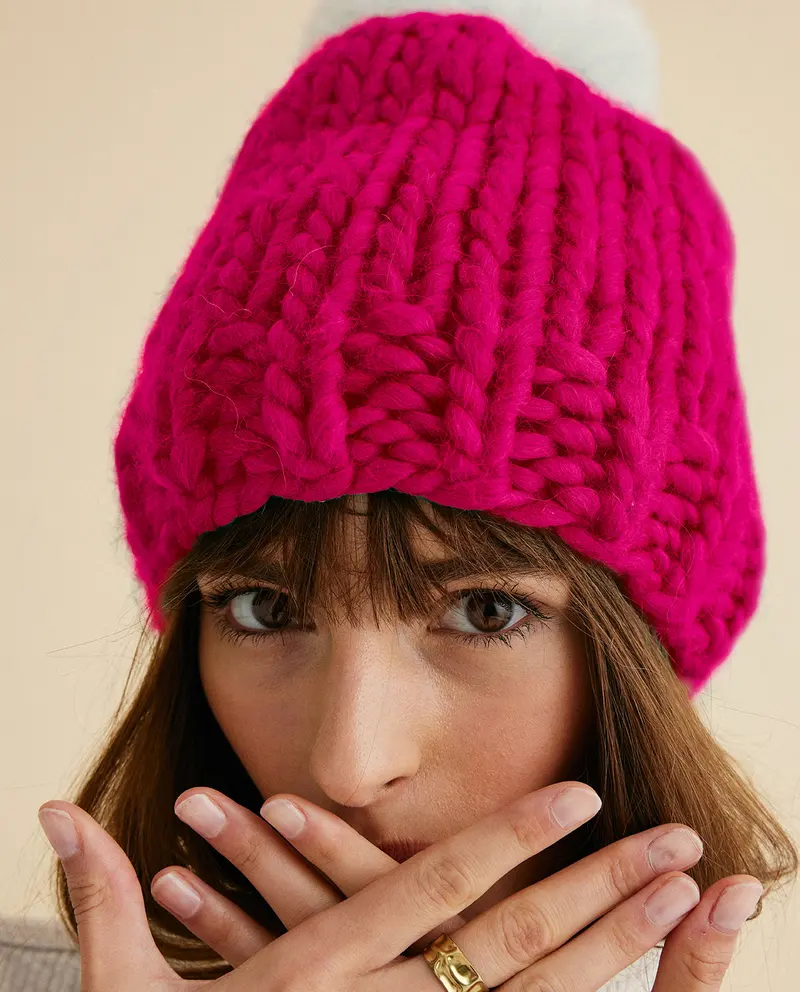
The trick to taming them? Use them in small doses rather than in total look (unless you fully embrace them, and in that case, go for it). A fuchsia pompom on a beige bag. Coral stripes on a white tote. A banana yellow square amidst neutral ones. These bursts of colour add character without risk of boredom.
Gradients: The Soft Trend
Rather than solid colours, many crocheters and knitters in 2026 seek subtle transitions between close shades. Powder pink blending into peach, sky blue shifting into pearl grey, sage green lightening into mint. These colour transitions create depth and a well-crafted appearance, even on a simple stitch.
Several brands offer multicoloured or gradient yarns that achieve these effects automatically, without changing skeins. It’s the simplest way to obtain a sophisticated result without complicating matters. Discover our selection of yarns and wool to find your ideal gradient.
Graphic Black and White
It's not mentioned enough, but the black and white duo is making a strong comeback in 2026, notably in mosaic crochet and jacquard. The maximum contrast between the two creates highly graphic geometric patterns: diamonds, chevrons, checkerboards. It’s modern, it’s timeless, and it pairs with everything.
In knitting, a black and white sweater with geometric patterns makes a stunning effect. In crochet, a tightly stitched bag alternating black and white results in something rivaling designer accessories. The advantage is that these are two basic colours available in every yarn, weight, and material.
How to Compose Your Palette
You've spotted your favourite colours but don’t know how to combine them? Here are three approaches that always work.
Tone-on-tone. Stick to the same family of colours and vary intensities: light sand, medium beige, dark terracotta. It’s soft, harmonious, and works for everything (bags, clothing, decor). Hard to go wrong.
Neutral + a pop. Choose a neutral base (white, beige, grey) and add a single bright accent colour. It’s the most flattering and wearable combination. A beige sweater with a coral collar. An off-white bag with a terracotta handle.
Bold contrast. Pair two bold, opposing colours: electric blue and terracotta, fuchsia and sage green, black and banana yellow. It's daring, but on an accessory or bag, it creates a strong visual impact without being too risky to wear. Test first on a small project (pouch, granny square) before committing to an entire sweater.
Frequently asked questions
- How can you tell if two colours go well together?
The most reliable method: place the balls next to each other in natural light. If the combination pleases you instantly, it's a good sign. Generally, warm tones go well together (terracotta, coral, ochre) and so do cool tones (blue, sage green, lavender). For contrast, pair a warm tone with a cool one. And if in doubt, add a neutral (white, beige, grey) between two strong colours to calm the ensemble.
- Is it better to buy all your balls of yarn at once?
Yes, absolutely. Dye baths vary from one batch to another, and two balls of the same shade bought at a few weeks' interval may show visible differences once crocheted alongside each other. Check the batch numbers on the labels and buy all at once, with an extra ball for safety.
- Won't bright colours go out of fashion quickly?
Vibrant shades come back in cycles. If you fear you might tire of them, use them for small projects (clutches, bags, accessories) rather than on a jumper that takes 30 hours of work. A coral bag or a fuchsia clutch can be crocheted in a few hours and add a touch of colour with less risk. Earthy tones and neutrals, on the other hand, are safe bets that transcend seasons without hesitation.